|
ONCOLOGY UPDATE
Tamoxifen, an estrogen antagonist, is
associated with side effects classically seen during
menopause. These side effects include hot flashes, night
sweats, and joint pain and stiffness. An interesting
study in the October 30, 2008, Lancet Oncology, suggests that these specific side effects may be a sign
that the treatment is working. In a “look-back” study,
also known as a retrospective study, 3,964 women with
early-stage breast cancer were treated with either
tamoxifen or anastrozole (Arimidex). Both drugs block
estrogen in different ways. Tamoxifen is a direct
receptor blocker and anastrozole blocks the activity of
aromatase, an enzyme important in the production of
estrogen in fat and other tissues. Nearly 40% of the
3,964 women reported vasomotor symptoms (hot flashes and
night sweats) and 31% reported joint pain and stiffness.
After nine years, women who experienced both vasomotor
symptoms and joint symptoms had an 11.4% lower risk for
a tumor recurrence. Women who experienced only joint
pain had a 10% reduction in recurrence and women who
reported only vasomotor symptoms had a 6% reduction in
symptoms. Now, don’t panic if you’re reading this, on
tamoxifen, and you’re not having any symptoms. It
doesn’t mean that your tamoxifen ISN’T working. It most
likely means that some women have enhanced or
intensified hormonal effects—most likely due to genetic
or epigenetic reasons.
|
|
NUTRITIONAL NUGGETS
 Dark
chocolate. Consuming moderate
amounts of dark chocolate could help lower your levels
of C-reactive protein, which can be measured to
determine the general degree of inflammation in the
body. In a study published in the October 2008 issue of
the Journal of Nutrition, a study of more than
2,000 people found that those who ate up to one serving
(20g) of dark chocolate every three days had CRP
concentrations significantly lower than those who ate
none or who ate larger amounts. Researchers suggested
that eating too much could result in an increase in
lipids and calories that would wipe out the
anti-inflammatory benefits of the dark chocolate. Other
research has also noted the cardiovascular and
anti-inflammatory benefits of flavonoid-rich foods such
as dark chocolate. YES! Dark
chocolate. Consuming moderate
amounts of dark chocolate could help lower your levels
of C-reactive protein, which can be measured to
determine the general degree of inflammation in the
body. In a study published in the October 2008 issue of
the Journal of Nutrition, a study of more than
2,000 people found that those who ate up to one serving
(20g) of dark chocolate every three days had CRP
concentrations significantly lower than those who ate
none or who ate larger amounts. Researchers suggested
that eating too much could result in an increase in
lipids and calories that would wipe out the
anti-inflammatory benefits of the dark chocolate. Other
research has also noted the cardiovascular and
anti-inflammatory benefits of flavonoid-rich foods such
as dark chocolate. YES!
B12 and the incredible shrinking brain.Is there no end to the
benefits of vitamin B12? YES, it helps maintain a
healthy production of red blood cells, and YES, it keeps
your neurons happy, and YES, it helps maintain
peripheral nervous system myelin, so what else is new? A
study in the journal Neurology, (September 9,
2008), found that older people with low, but still
“normal,” levels of B12 were 6 times more likely to
experience brain atrophy (shrinkage) than those with the
highest B12 levels. The low-B12 group in the study also
lost twice as much brain volume on average. WHOA!! But,
before you run out and buy all of the B12 on every shelf
in Wal-Mart, Kmart, and Target, note that this study had
a few flaws—1) it was an observational study and
couldn’t prove a causal connection between vitamin B12
intake and brain shrinkage, and 2) the sample size was
relatively small (107 men and women). BUT, that being
said, most of us over 50 could use a little boost of B12
and it certainly couldn’t hurt, and it has all of the
potential in the world to help. So…
Next question? How can we pump up the
B12? B12 is naturally found in foods that come from
animals, including fish, meat, poultry, eggs, milk, and
dairy products. The RDA (Recommended Daily Allowance)
for adults is 2.4 micrograms per day—roughly the amount
found in 3 ounces of lean beef. Most Nutrition Facts
labels don’t list a food’s B12 content; those that do
use percentages based on the DV (Daily Value), which for
B12 is 6.0 micrograms. Up to 30% to 40% of people over
50 may have a problem with B12 absorption because of a
reduced production of stomach acid that prevents them
from absorbing sufficient B12 from food, so their
dietary adjustment to boost B12 isn’t quite so easy.
So, how about some examples of
B12-containing foods? These food servings all provide at
least 25% of the Daily Value of vitamin B12:
Clams, 3 oz. cooked
Beef liver, braised, 1 slice
100% fortified breakfast cereal, ¾
cup
Rainbow trout, 3 oz.
Sockeye salmon, 3 oz.
Lean top sirloin, broiled, 3 oz.
Plain skim yogurt, 1 cup
Is sushi (raw fish) nutritionally better
than cooked seafood? Nope, cooking doesn’t IN ANY WAY,
destroy the omega-3 fatty acids and the proteins that
make fish such a superb choice. In fact, cooking fish
kills the harmful bacteria and intestinal parasites
found in raw seafood. Cooking fish is absolutely
imperative for patients with compromised immune
systems.
(Tufts University Health and Nutrition
Newsletter, December 2008)
Peanut allergies—some interesting new
findings. The rise in peanut
allergies has been astronomical and of course,
explanations have NOT been forthcoming. However, a few
hypotheses have been proposed and most of them related
allergies to genes and a genetic predisposition. But,
that really doesn’t make any sense because genes don’t
change as rapidly as the rise in peanut allergies.
Another hypothesis having nothing to do with genes seems
to stand out amongst all others. A 2003 study by
Allergist Gideon Lack of King’s College of London found
that preschool children who were allergic to peanuts
were much more likely as infants to have been treated
with skin lotion containing peanut oil than were
children who didn’t have the allergy. The researchers
hypothesized that exposure to peanut protein through the
skin laid the foundation for an aberrant immune reaction
that resulted in allergy.
A second finding by the same researcher
found that early exposure to peanuts via the diet
decreases a child’s risk of developing a peanut allergy
later in life. This of course, flies in the face of the
usual recommendations given to parents by Pediatricians.
The new study suggests that early exposure to peanuts,
in the form of eating peanut butter, might induce
tolerance and head off the aberrant immune response that
underlies an allergic reaction. (Journal of Allergy
and Clinical Immunology, November 2008)
|
|
NEUROLOGY QUIPS
 Neurologic
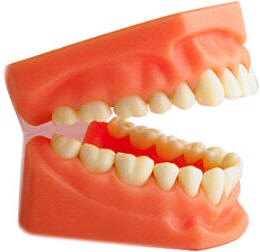
symptoms and denture cream. Can the use of denture cream cause neurologic symptoms?
Whaaaaaaaaaaaaat are you talking about, BB? A couple of
studies discussed a total of 4 patients with myelopathy
and found that all four patients had hyperzincemia (high
zinc), hyopcupremia (low copper) and myeloneuropathy
(disease of the central nervous system myelin). The
commonality between all four patients was the use of
copious amounts of denture cream. So, the authors of the
two studies examined the three formulations of denture
cream used by the 4 patients and found zinc contents
ranging from 17 mg/g to 34 mg/g. Cessation of denture
cream use in three patients was accompanied by a
reduction in serum zinc levels. Copper supplementation
in all 4 patients resulted in normalization of copper
levels. Only two patients improved neurologically. Neurologic
symptoms and denture cream. Can the use of denture cream cause neurologic symptoms?
Whaaaaaaaaaaaaat are you talking about, BB? A couple of
studies discussed a total of 4 patients with myelopathy
and found that all four patients had hyperzincemia (high
zinc), hyopcupremia (low copper) and myeloneuropathy
(disease of the central nervous system myelin). The
commonality between all four patients was the use of
copious amounts of denture cream. So, the authors of the
two studies examined the three formulations of denture
cream used by the 4 patients and found zinc contents
ranging from 17 mg/g to 34 mg/g. Cessation of denture
cream use in three patients was accompanied by a
reduction in serum zinc levels. Copper supplementation
in all 4 patients resulted in normalization of copper
levels. Only two patients improved neurologically.
So, what’s the bottom line here? It
appears as if acquired copper deficiency is being
recognized by neurologists and a cause of myelopathy.
And, of course, the causes of copper deficiency include
gastrointestinal by-pass surgery as well as
malabsorption. It’s been known for years that zinc
decreases copper absorption and the cause of zinc excess
is usually not apparent. The current studies illustrate
the importance of considering excess use of
zinc-containing denture creams as a potential source of
zinc in patients with neurologic disease related to
copper deficiency. Don’t forget that zinc has been
touted as the be all and end-all for cold prevention, so
many over-the-counter cold prevention medications may
also be a cause of zinc overload. (Nations SP et al.
Denture cream: An unusual source of excess zinc, leading
to hypocupremia and neurologic disease. Neurology 2008 Aug 26;71;639; Schaumburg H and Herkovitz S. Copper
deficiency myeloneuropathy: A clue to clioquinol-induced
subacute myelo-optic neuropathy? Neurology 2008
Aug 26;71:622.)
NEW DRUG APPROVAL FOR PAIN MANAGEMENT—Tapentadol
for moderate-to-severe pain. Available in tablet form in
doses of 59, 75, and 100 mg. It’s an opiod receoptor
agonist and a norepinephrine reuptake inhibitor. Read
more about it? http://tinyurl.com/66188a.
|